


Career Articles
Tax Professional to Data Analyst: Is Tax Analytics a Good Niche?
From Investment Research to Data Analytics: How to Bridge the Technical Skills Gap
How Banking and Financial Services Professionals Can Move into Data Analytics
Can FP&A Professionals Transition into Data Analytics Without Leaving Their Industry?


Get In Touch For Details! Request More Information
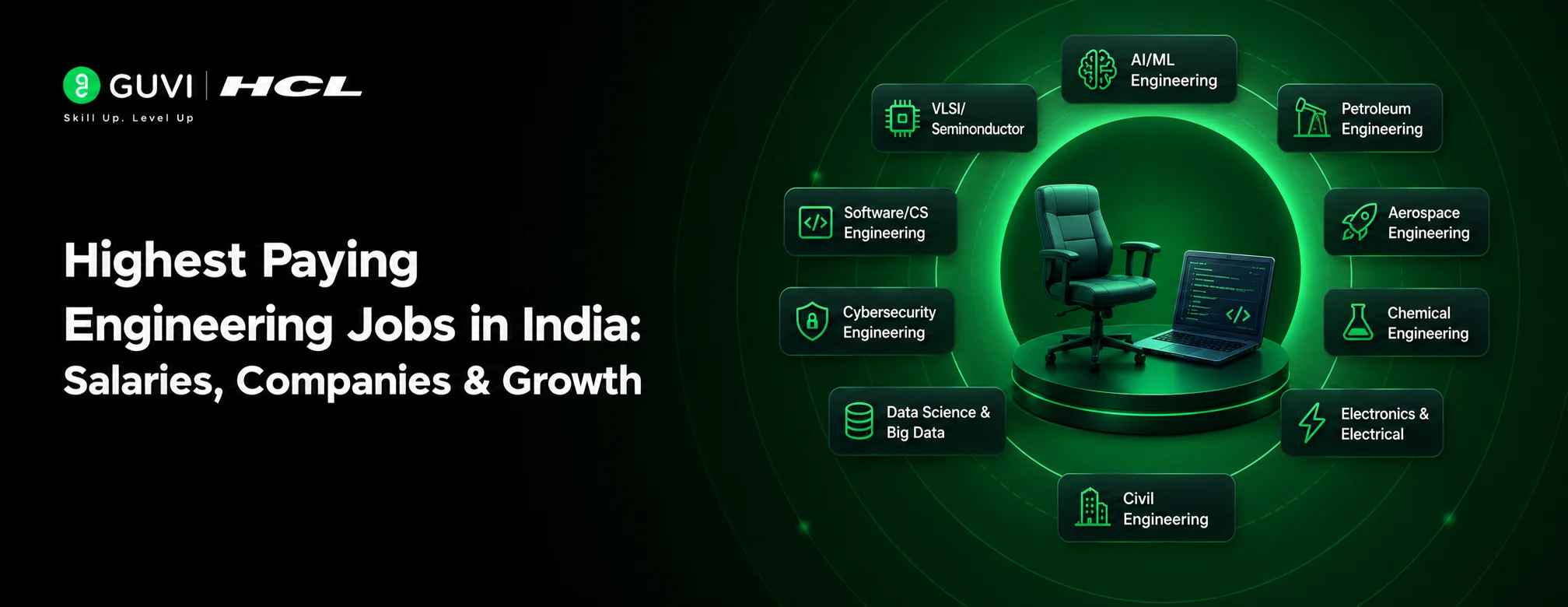
Highest Paying Engineering Jobs in India 2026: Salaries, Companies & Growth
Jul 16, 2026 4 Min Read 9080 Views
(Last Updated)
What if you could look ahead and figure out which engineering careers actually pay well before you even choose your branch? That single decision can shape your entire path, and it’s something many students think about but rarely get clear answers on.
With numerous specialisations in India, ranging from software and AI to petroleum, aerospace, and emerging green technologies, it helps to know where the real growth and earning potential lie.
If you’re just starting or planning your B.Tech route, understanding the highest paying engineering jobs which roles offer strong salaries can give you a serious head start. This article walks you through the highest-paying engineering jobs in India, what they involve, and what you can expect to earn as you grow. So, without further ado, let’s get started!
Table of contents
- Why Engineering Salaries Are Shifting
- Salary Comparison Table
- Top Highest-Paying Engineering Jobs in India
- AI and Machine Learning Engineering
- VLSI and Semiconductor Engineering
- Software and Computer Science Engineering
- Cybersecurity Engineering
- Data Science and Big Data Engineering
- Petroleum Engineering
- Aerospace and Aeronautical Engineering
- Chemical Engineering
- Electronics and Electrical Engineering
- Mechanical Engineering
- Civil Engineering
- Highest Paying Engineering Jobs Without Coding
- Core Engineering vs IT Engineering: The Salary Gap in 2026
- Which Engineering Branch Gets the Highest Package at Campus?
- Skills That Actually Move Your Salary
- Common Mistakes to Avoid
- Conclusion
- FAQs
- Which engineering job has the highest salary in India?
- Which engineering branch is best for the future?
- Do engineering jobs pay well for freshers in India?
- Can I get a high-paying engineering job with only a bachelor’s degree?
- Is computer engineering better than mechanical or civil for salary?
- Which engineering branch gets the highest package at campus placements?
- Do engineering freshers get high salaries in India?
Why Engineering Salaries Are Shifting
India’s Semiconductor Mission has pumped over $10 billion into domestic chip manufacturing, and industry demand for AI-skilled engineers continues to outpace supply. That gap between demand and available talent is a major reason AI, VLSI, and cybersecurity now command premiums that traditional branches took decades to reach.
Salary Comparison Table
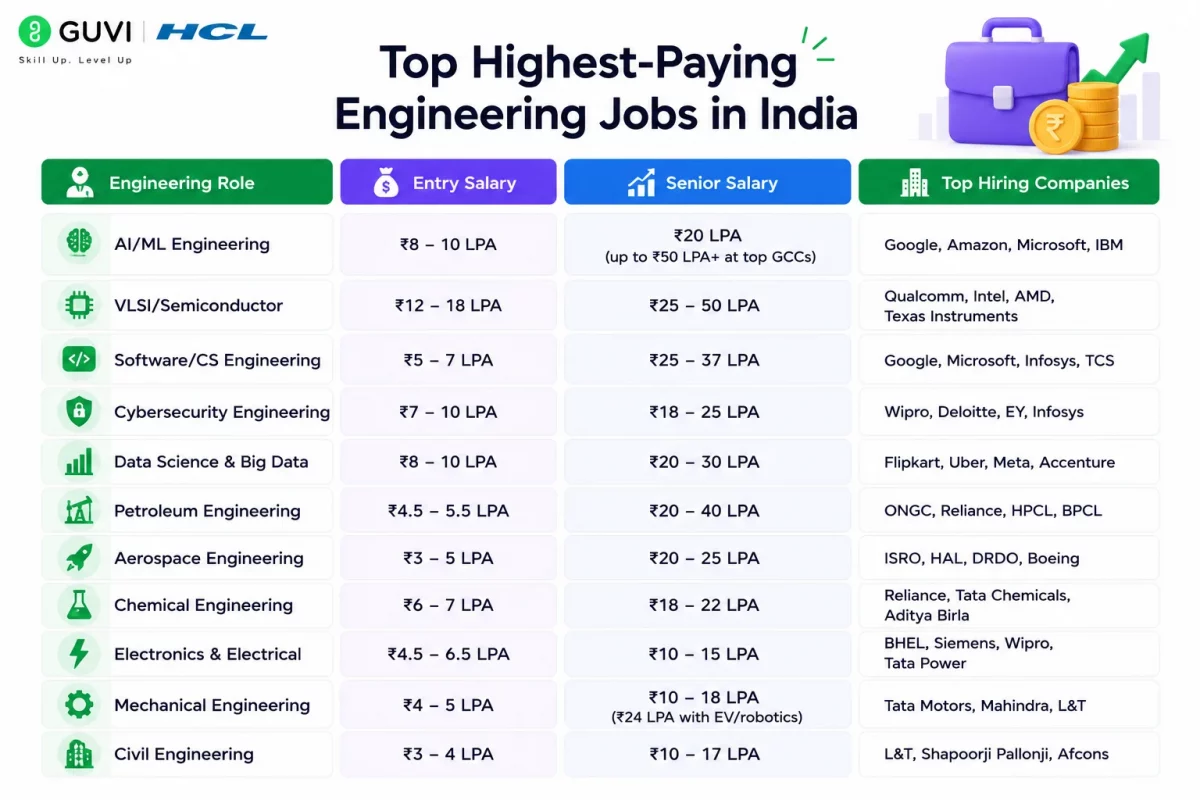
| Engineering Role | Entry Salary | Senior Salary | Top Hiring Companies |
|---|---|---|---|
| AI/ML Engineering | ₹8–10 LPA | ₹20 LPA (up to ₹50 LPA+ at top GCCs) | Google, Amazon, Microsoft, IBM |
| VLSI/Semiconductor | ₹12–18 LPA | ₹25–50 LPA | Qualcomm, Intel, AMD, Texas Instruments |
| Software/CS Engineering | ₹5–7 LPA | ₹25–37 LPA | Google, Microsoft, Infosys, TCS |
| Cybersecurity Engineering | ₹7–10 LPA | ₹18–25 LPA | Wipro, Deloitte, EY, Infosys |
| Data Science & Big Data | ₹8–10 LPA | ₹20–30 LPA | Flipkart, Uber, Meta, Accenture |
| Petroleum Engineering | ₹4.5–5.5 LPA | ₹20–40 LPA | ONGC, Reliance, HPCL, BPCL |
| Aerospace Engineering | ₹3–5 LPA | ₹20–25 LPA | ISRO, HAL, DRDO, Boeing |
| Chemical Engineering | ₹6–7 LPA | ₹18–22 LPA | Reliance, Tata Chemicals, Aditya Birla |
| Electronics & Electrical | ₹4.5–6.5 LPA | ₹10–15 LPA | BHEL, Siemens, Wipro, Tata Power |
| Mechanical Engineering | ₹4–5 LPA | ₹10–18 LPA (₹24 LPA with EV/robotics) | Tata Motors, Mahindra, L&T |
| Civil Engineering | ₹3–4 LPA | ₹10–17 LPA | L&T, Shapoorji Pallonji, Afcons |
Salary ranges compiled from Naukri Campus, Glassdoor, and industry hiring reports. Actual offers vary by city, company tier, and candidate skills.
Top Highest-Paying Engineering Jobs in India
1. AI and Machine Learning Engineering
AI engineers build the models behind recommendation systems, chatbots, and automation tools. You’ll need Python, statistics, and hands-on experience with frameworks like TensorFlow or PyTorch.
2. VLSI and Semiconductor Engineering
VLSI engineers design the chips inside smartphones, cars, and servers. With India building its own chip ecosystem, this path suits ECE graduates who enjoy hardware as much as code.
3. Software and Computer Science Engineering
Software engineers build the apps, platforms, and cloud systems Indian businesses run on. Python, Java, data structures, and system design remain the core skills.
4. Cybersecurity Engineering
As India’s Digital Personal Data Protection Act raises the stakes, cybersecurity has become a boardroom priority. You’ll need networking fundamentals and comfort with tools like Wireshark or Burp Suite.
5. Data Science and Big Data Engineering
Data professionals turn raw information into decisions, building pipelines, dashboards, and predictive models. SQL, Python, and tools like Spark or Power BI matter most.
6. Petroleum Engineering
Petroleum engineers design methods to extract oil and gas safely. Strong fundamentals in geology and fluid mechanics are essential for this still-lucrative traditional branch.
7. Aerospace and Aeronautical Engineering
If aircraft, satellites, or spacecraft interest you, this field rewards strength in aerodynamics, propulsion, and CAD tools like CATIA.
8. Chemical Engineering
Chemical engineers design processes that turn raw materials into fuel, plastics, and pharmaceuticals. Thermodynamics and process safety form the core of this role.
9. Electronics and Electrical Engineering
ECE and EEE graduates work on circuits, telecom systems, and power grids. Specialising in VLSI or embedded systems pushes salaries well above the branch average.
10. Mechanical Engineering
Core mechanical roles start modestly, but adding EV design, robotics, or automation to your skill set changes the pay bracket entirely, as the table above shows.
11. Civil Engineering
Civil engineers plan and build the roads, bridges, and buildings India relies on. Structural mechanics, surveying, and construction codes are must-have skills.
Highest Paying Engineering Jobs Without Coding
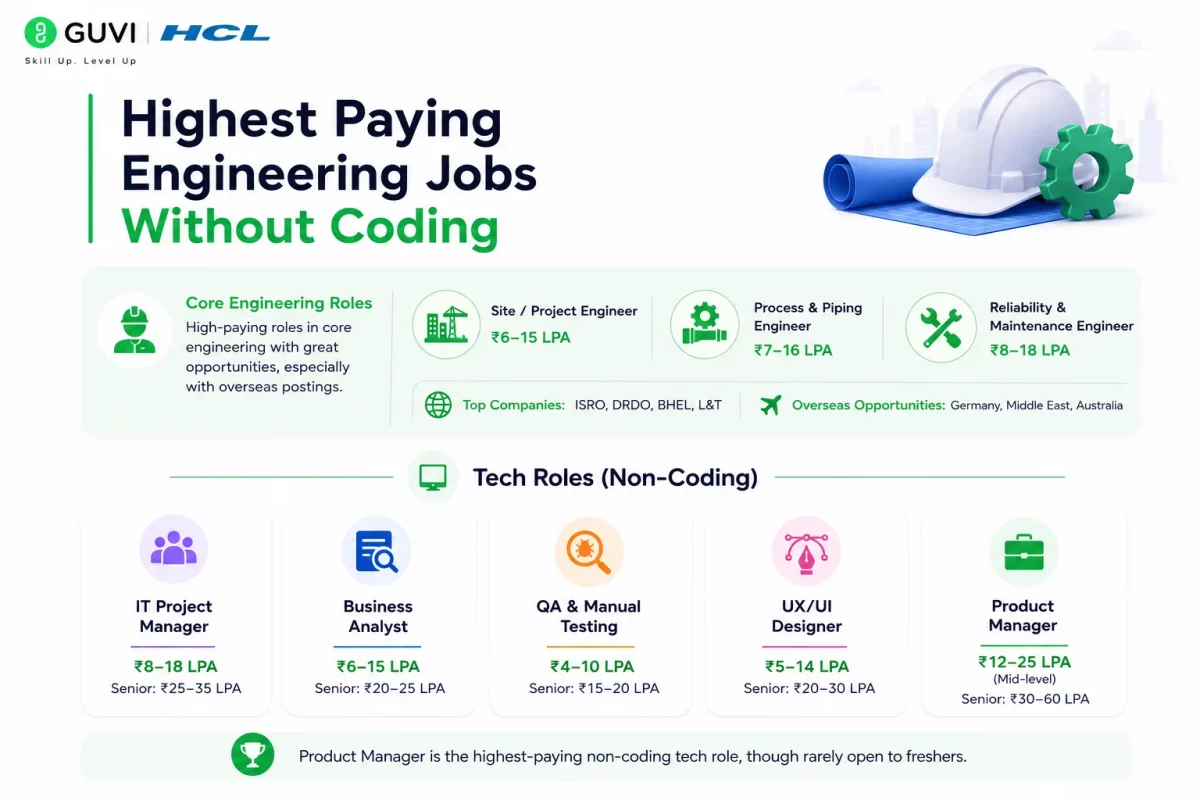
Not every high-paying engineering career involves writing code. On the core engineering side, roles like Site or Project Engineer, Process and Piping Engineer, and Reliability and Maintenance Engineer at companies like ISRO, DRDO, BHEL, and L&T pay competitively, especially with overseas postings in Germany, the Middle East, or Australia.
On the tech side, these non-coding roles regularly attract engineering graduates:
- IT Project Manager: ₹8–18 LPA, senior ₹25–35 LPA. Leads tech projects and coordinates teams without writing code.
- Business Analyst: ₹6–15 LPA, senior ₹20–25 LPA. Translates business needs into technical requirements.
- QA and Manual Testing: ₹4–10 LPA, senior ₹15–20 LPA. Validates software quality before release.
- UX/UI Designer: ₹5–14 LPA, senior ₹20–30 LPA. Shapes how products look and feel.
- Product Manager: ₹12–25 LPA mid-level, ₹30–60 LPA at senior levels in top product firms. The highest-paying non-coding tech role, though rarely open to freshers.
Core Engineering vs IT Engineering: The Salary Gap in 2026
Across campus placements, CSE and IT branches typically earn 40 to 60% more than core branches like mechanical, civil, or chemical engineering. At IIT Kanpur, for instance, CSE graduates averaged close to ₹43 LPA against an overall campus average nearer ₹26 LPA.
That gap is real, but it isn’t fixed. Core branch graduates who add software skills, or specialise in high-value areas like VLSI, EV systems, or robotics, regularly close most of the difference. The branch decides your starting point; your specialisation decides how much of that gap you close.

Which Engineering Branch Gets the Highest Package at Campus?
Computer Science Engineering consistently tops campus placements across every major IIT, from Bombay to Kanpur to Delhi, with branch averages running well above the overall campus average. That said, the single highest individual offers each season often go to quantitative trading and finance roles at firms like Jane Street, typically recruited from CSE or mathematics backgrounds, not to any core branch.
Core branches aren’t shut out of big numbers either. Specialised postgraduate roles in fields like mechanical engineering have touched packages nearing ₹50 LPA in recent cycles, proof that the right specialisation can outperform the branch average by a wide margin.
Skills That Actually Move Your Salary
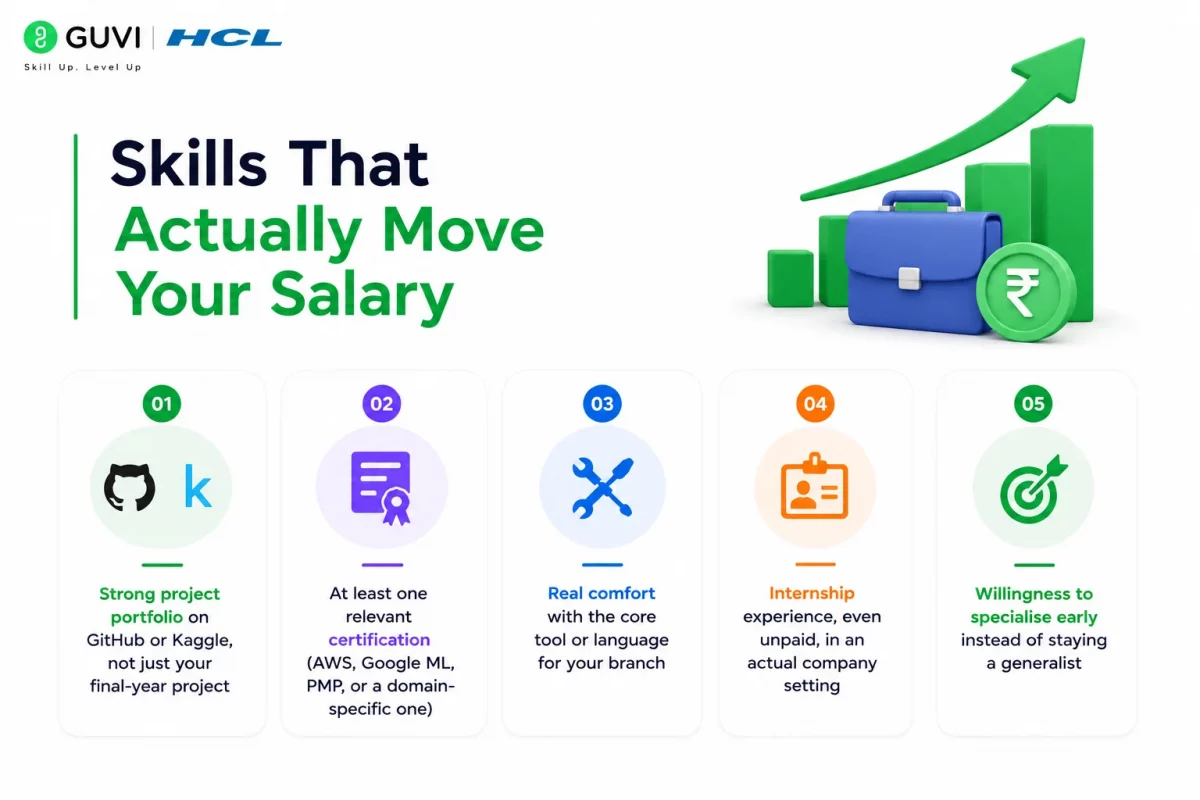
- A strong project portfolio on GitHub or Kaggle, not just your final-year project
- At least one relevant certification (AWS, Google ML, PMP, or a domain-specific one)
- Real comfort with the core tool or language for your branch
- Internship experience, even unpaid, in an actual company setting
- Willingness to specialise early instead of staying a generalist
Common Mistakes to Avoid
- Chasing trends over aptitude. Picking AI or VLSI just because it pays well can backfire if you don’t enjoy the work itself.
- Skipping skill-building outside class. A degree alone rarely gets you a high-paying offer anymore.
- Ignoring specialisation within core branches. Mechanical, civil, and electrical graduates who add EV, robotics, or VLSI skills often out-earn peers who stick to the standard syllabus.
Want to build the skills recruiters are hiring for right now? Whether that’s AI, software development, or data science, HCL GUVI’s Zen Class programmes are built around real, hands-on projects. (Insert course link with UTM parameters before publishing.)
Most students assume software engineering pays the most, but petroleum engineers in India can actually earn higher packages at senior levels, sometimes crossing ₹40 LPA. Another surprising fact: AI and data roles now grow faster than any traditional engineering branch, with thousands of new openings added every month. Even better, many of these high-paying jobs accept candidates with just a bachelor’s degree, as long as you build the right skills early on.
Conclusion
In conclusion, choosing an engineering path isn’t just about chasing the highest salary, but it’s also smart to understand where the opportunities are strongest. Fields like AI, data, petroleum, aerospace, and software continue to offer impressive pay because companies need engineers who can build, optimise, and innovate at a rapid pace. Even traditional domains like mechanical, civil, and electrical can open doors to high-paying roles when combined with the right skills and practical experience.
FAQs
1. Which engineering job has the highest salary in India?
Petroleum engineering, AI/ML engineering, and software engineering often top the list. Senior roles in these fields can reach ₹25–40 LPA depending on skills and company.
2. Which engineering branch is best for the future?
AI/ML, computer science, data science, and aerospace are seeing the fastest growth. These fields offer strong demand and high long-term earning potential.
3. Do engineering jobs pay well for freshers in India?
Yes, but it varies by domain. Freshers typically earn ₹3–6 LPA, while graduates in AI/ML or top tech companies may start at higher packages.
4. Can I get a high-paying engineering job with only a bachelor’s degree?
Absolutely. Most high-paying roles in software, data, petroleum, electronics, and mechanical engineering accept bachelor’s graduates with the right skills.
5. Is computer engineering better than mechanical or civil for salary?
From a salary perspective, computer-related fields usually pay more, especially at the entry level. Mechanical and civil can also pay well, but often require more experience to reach higher brackets.
6. Which engineering branch gets the highest package at campus placements?
Computer Science Engineering consistently leads branch-wise averages at every major IIT, though the single highest individual offers often go to finance and quant trading roles.
7. Do engineering freshers get high salaries in India?
It depends on the branch. AI, VLSI, and software roles at top companies can start freshers at ₹12 to 22 LPA, while traditional branches usually start between ₹3 and 6 LPA.
Success Stories

About the Author
Lukesh S
A professional content writer who has experience in freelancing and now working as a Technical Content Writer at HCL GUVI having sound knowledge in Blog Writing and Creative Writing!
View all posts by Lukesh S
Connect with me @














Did you enjoy this article?